Tiger Symbolism in Chinese Culture: Strength, Protection, and Fortune
Liao Qing · TigerVow Studio Official
· 4 views
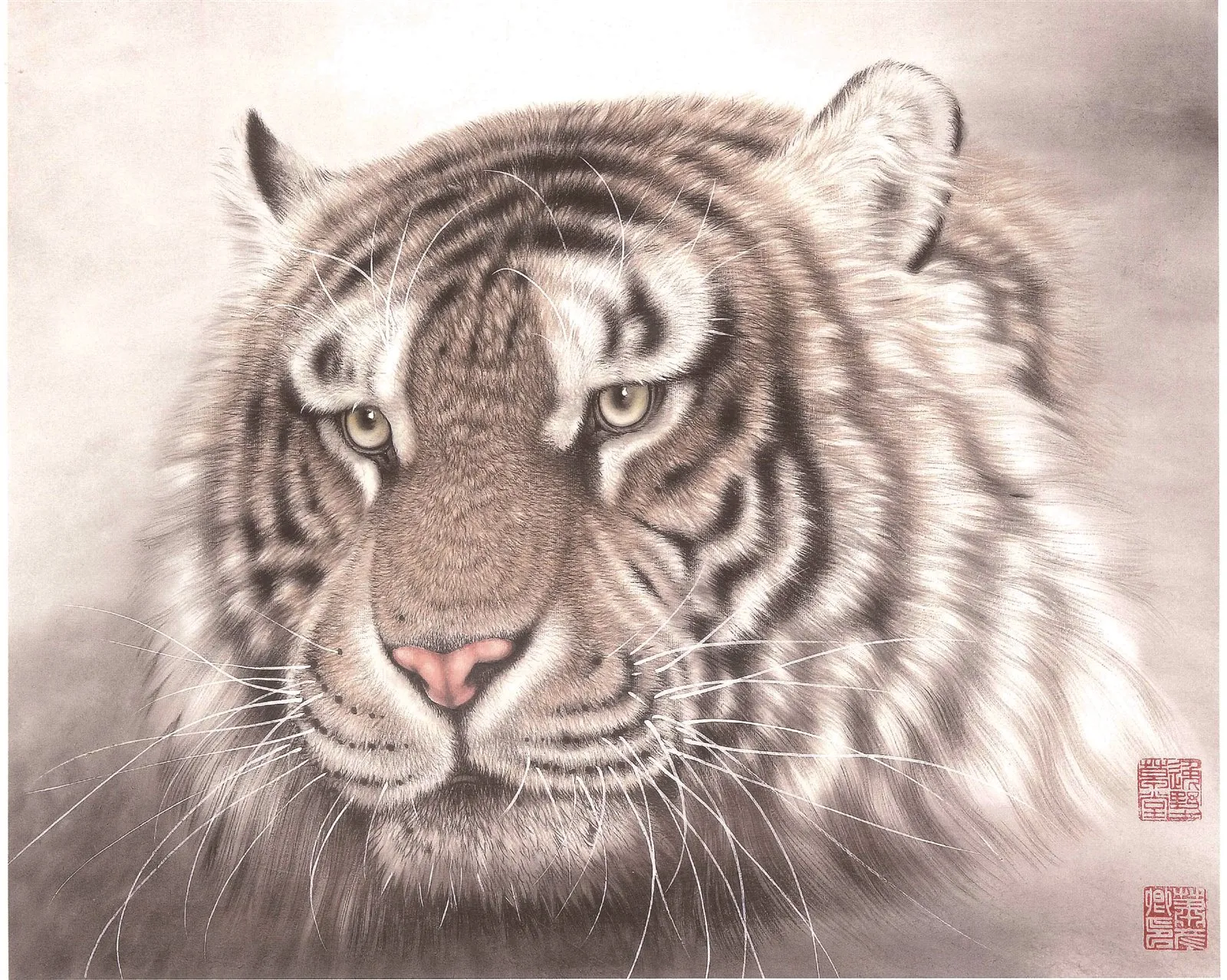
In the West, the tiger is one image: the striped predator. In Chinese culture it is an entire constellation of meanings — guardian, king, seasonal power, the protector of children, and one of the four great creatures of the sky. To own a tiger painting is to own a piece of that language.
The King of Beasts — and a Companion of the Dragon
Chinese tradition calls the tiger the king of a hundred beasts. On the ground, its stripes earned it the pattern the ancients associated with kingship; in the sky, it rules alongside the dragon. Where the dragon governs what rises — clouds, rain, the heavens — the tiger governs what prowls, protects, and endures below. Together they are Yang energy in its two great forms.
The White Tiger of the West
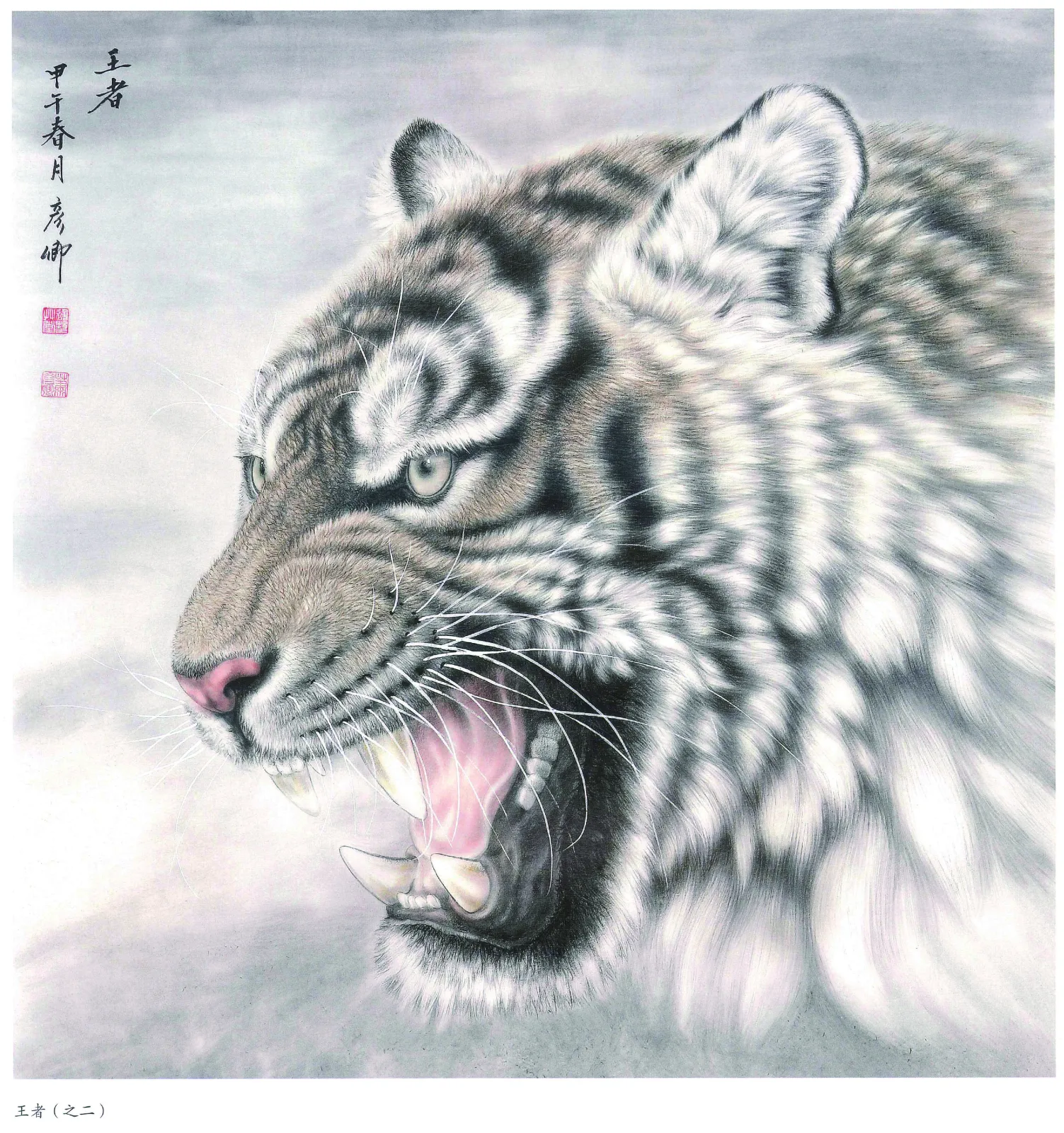
In Chinese cosmology the four cardinal directions are guarded by four creatures. The West belongs to the White Tiger (白虎), the guardian of autumn and metal, associated with protection and martial virtue. A white tiger painting — like the great gongbi portraits in our collection — carries this ancient guardianship into the home.
The Mountain Lord
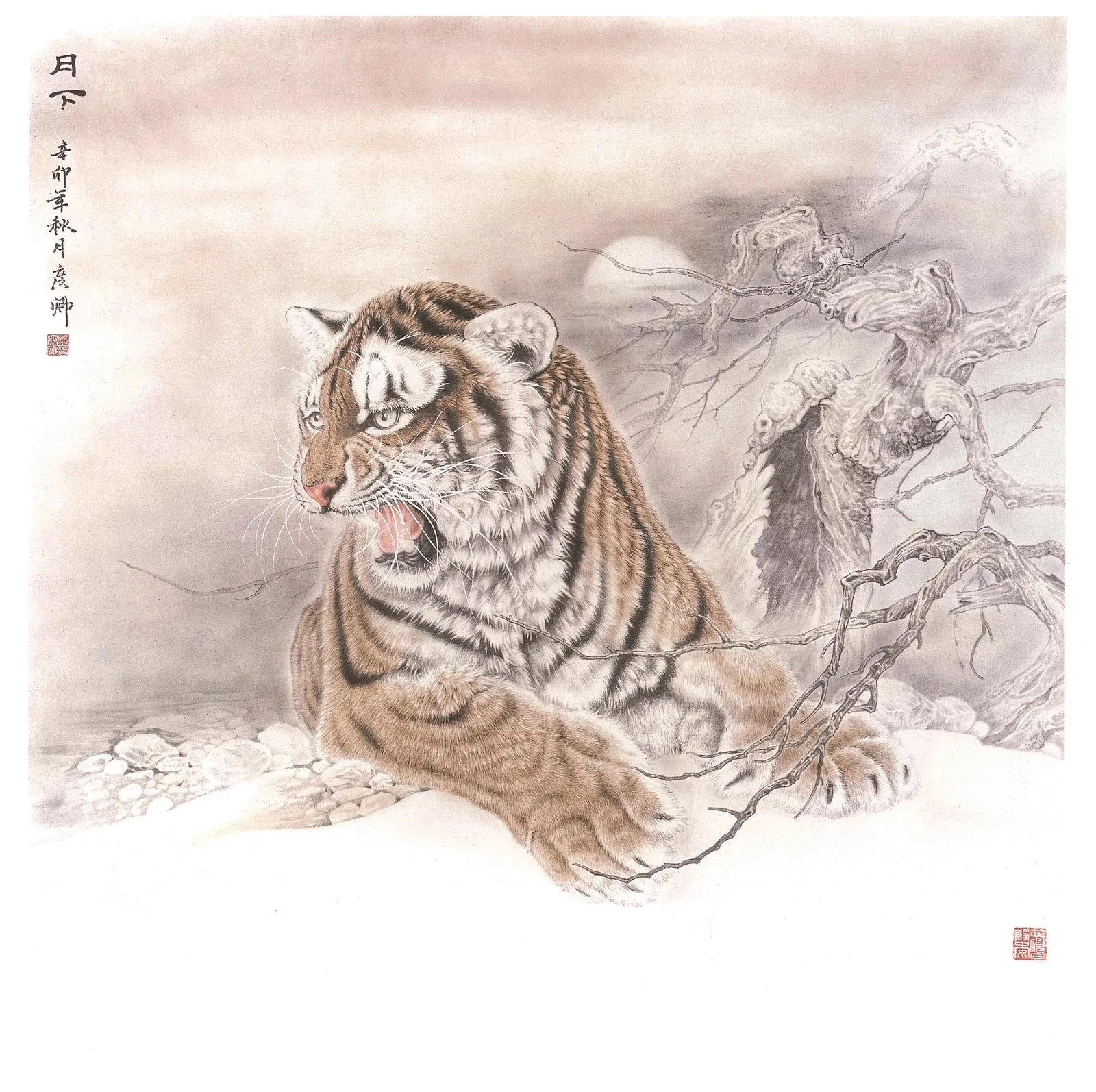
Among artists, the tiger has long been addressed by the honorific Shān Jūn — "Lord of the Mountains." Painters reserved this reverence for the tiger alone among beasts: not because it is fierce, but because it holds a territory with dignity. It does not need to roar at every moment; the bear and the leopard yield to its stride.
Protector of Children and Families
Walk through any old Chinese village and you will find the tiger everywhere: embroidered on a child's hat, stitched into tiny shoes, painted on a wall near the door. The folk tradition holds that the tiger watches over the young and turns away sickness. This is why tiger paintings are still among the most gifted artworks in China — given at births, weddings, and moves into a new home.
Why Artists Paint Tigers
And why do painters spend weeks on a single tiger's coat, painting thousands of individual hairs? Because the tiger demands it. In gongbi painting every strand of fur, every flicker of the eyes, every whisker is built up layer by layer in ink. A tiger painted by hand is a meditation on patience — which is, in the end, the tiger's own quality: patient power, held in stillness until the moment it is needed.
Featured in This Story
0 Comments
No comments yet. Start the conversation!