Wanggongzhuang — The Village That Paints Tigers, and the Journey Across the Sea
Liao Qing · TigerVow Studio Official
· 115 views
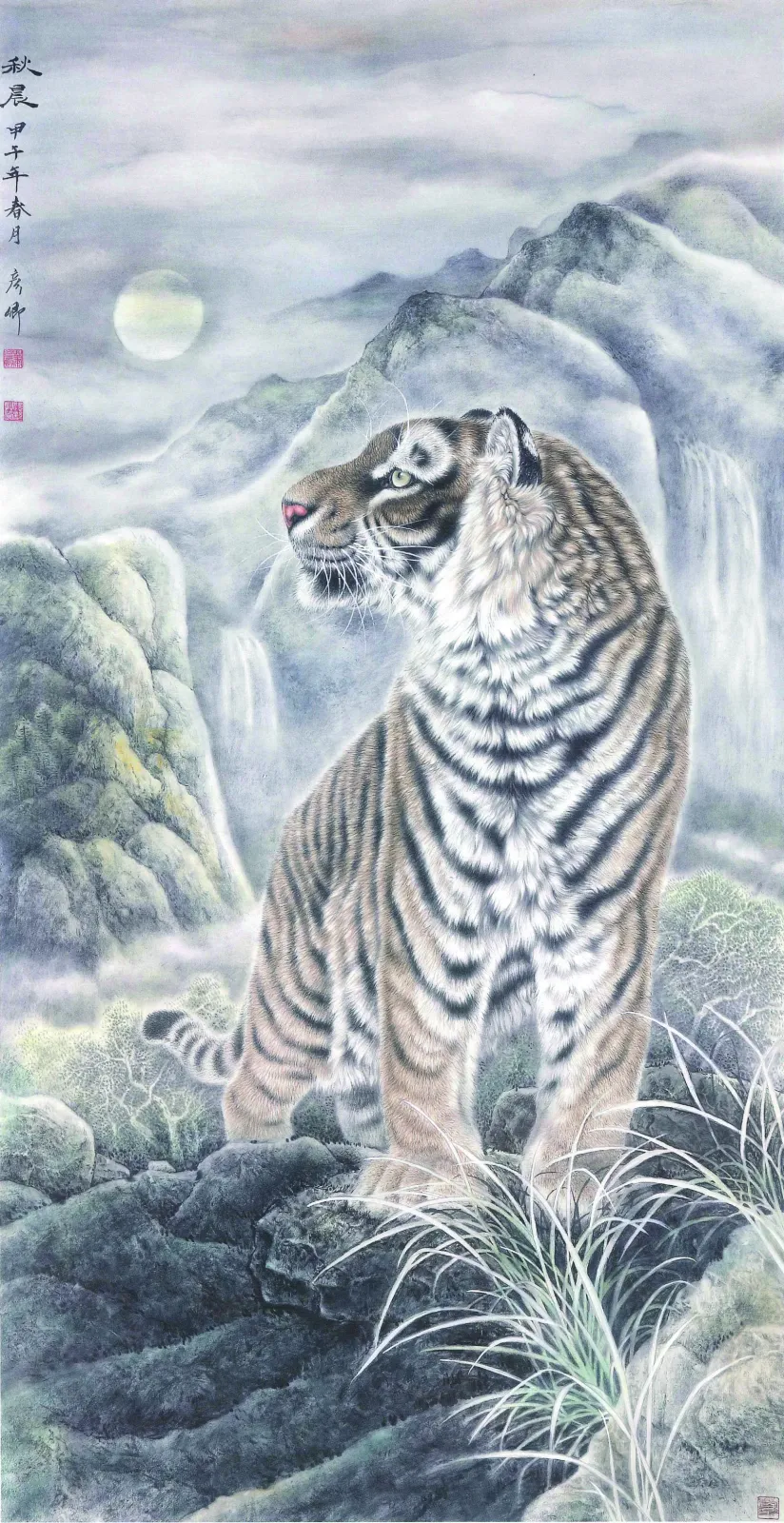
If you drive three hours south of Zhengzhou, the capital of Henan Province, you will reach a cluster of low brick houses among the wheat fields. The sign at the entrance reads Wanggongzhuang (王公庄). To the outside world, it is a farming village. To anyone who has seen its paintings, it is the Village of Tiger Painters — the only place on earth where the brush has not fallen silent for six hundred years.
How a Village Became the Home of the Tiger
No one in Wanggongzhuang can tell you the exact year it began. The grandfathers say it began with their grandfathers, and theirs before them. What is certain is this: sometime in the Ming Dynasty, a farmer in the village picked up a brush and painted a tiger on a piece of rough paper, to hang above the door of his new home — as a guardian against harm and a call for fortune. The tiger was so alive that the neighbors asked for one. Then the neighbors of the neighbors. Then, slowly, the villages across the river.
And so, after the autumn harvest, the farmers of Wanggongzhuang became painters. Not by leaving the village, but by staying in it. The brush was handed from father to son, from mother to daughter, in the amber light of the winter evenings. Six generations grew up this way. Then ten. Then twenty. The village kept the wheat, and the village kept the tiger.
The Craft, and What Makes It Real
A Wanggongzhuang tiger is not painted quickly. The master painter begins with the eyes — because the eyes are where the tiger's spirit enters the paper. Only when the eyes are right does the rest of the body follow: the muscles, the stripes, the mountain behind, the wind in the fur. A single serious painting can take weeks. The brush is held the way a calligrapher holds it — with the whole arm, the whole breath, the whole attention.
This is why a Wanggongzhuang tiger, when you stand before it, feels different from a print. The tiger is looking back at you. It was painted to look back at you.
The Journey Across the Sea
For centuries, the tigers of Wanggongzhuang never left the county. They hung in farmhouses, in tea houses, in the small shops of the market towns. The world did not know they existed.
Then, slowly, they began to travel — first to Beijing and Shanghai, then to galleries in Hong Kong and Singapore, then, in recent years, to collectors in London, New York, and Sydney. Every painting that crosses the ocean carries the same thing: the silent authority of a six-hundred-year tradition, compressed into a single image.
This is the journey Tiger Vow was built to protect.
What Stays, and What Crosses
When a Wanggongzhuang tiger leaves the village, two things happen at once. The painting gains a new home — a living room in a far country, a hallway in a foreign city, a child's room in a language the painter may never hear. And the village gains something, too: a reason to keep the brush, to teach the next child, to paint the next tiger when the winter comes.
What stays is the lineage. What crosses is the guardian. And the vow — the Tiger Vow — is that the two will never be separated: that every tiger that travels will carry the name of the village that painted it, and every village that paints will be kept alive by the tigers that travel.
Six hundred years. Six generations. One village. And now, finally, the world.

0 Comments
No comments yet. Start the conversation!