Why We Paint Tigers — The Chinese Soul of a Mighty Guardian
Liao Qing · TigerVow Studio Official
· 138 views
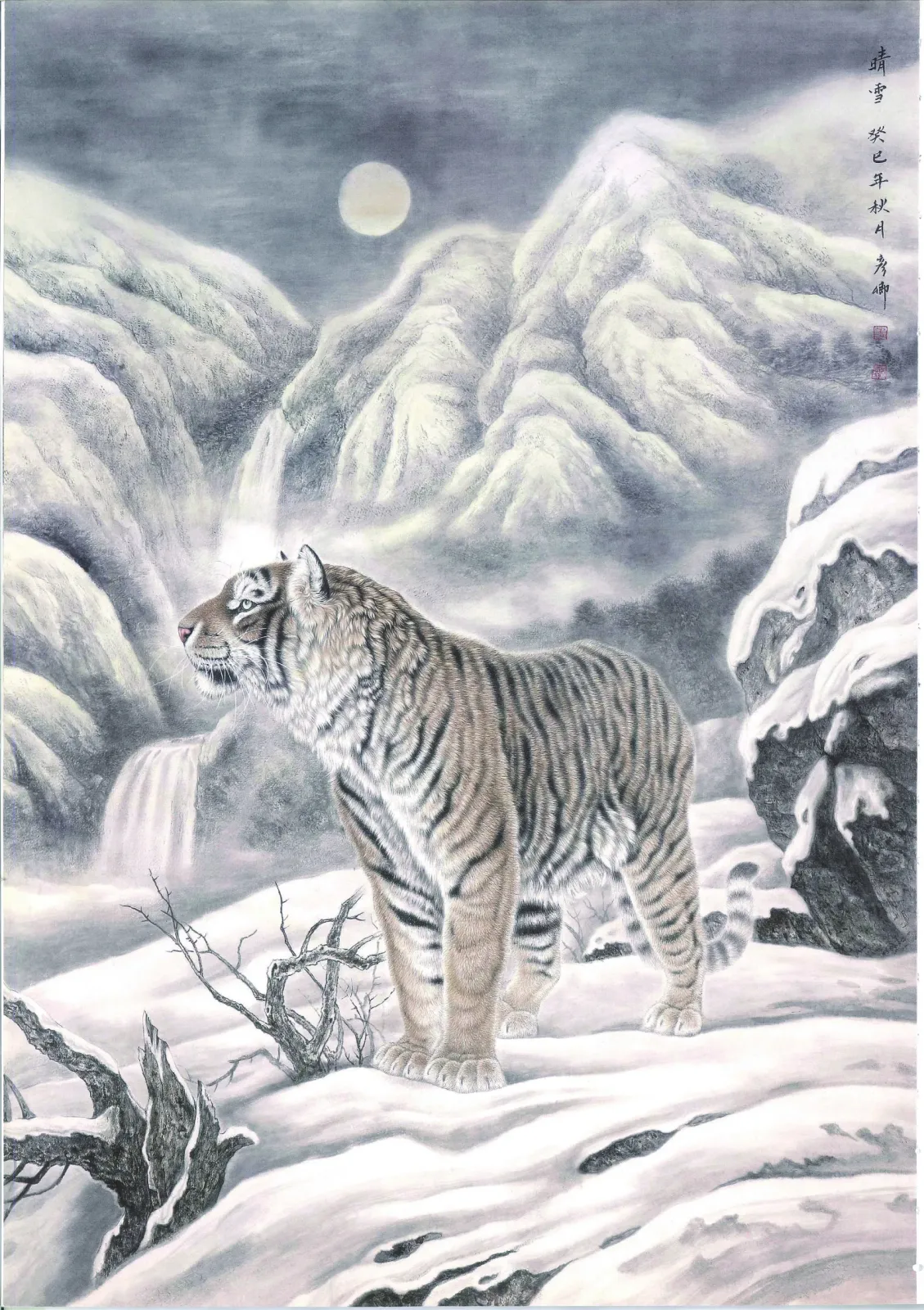
Walk into any traditional Chinese home with a story to tell, and you may find a tiger watching over the living room — eyes calm, posture still, brushstrokes full of quiet authority. It is not decoration. It is a promise.
The Tiger in the Chinese Imagination
In Chinese culture, the tiger is not merely an animal. It is the King of the Mountains (山君, the Lord of the Hills), the earthly ruler of all beasts and the animal that commands the West, the autumn, and the element of metal. Where the dragon rules the sky and the waters, the tiger rules the earth and the forests — and together they form the most powerful pair in Chinese symbolism, the Dragon and Tiger (龙虎), a balance of heaven and ground, of vision and strength.
For more than two thousand years, families have believed that a tiger painting holds the power to ward off evil, to attract fortune, and to protect the household. It is the reason why, even today, grandparents gift a tiger painting to a new home, a new business, or a newborn child. The tiger does not ask for attention. It simply stands watch.
Why We Sell Tiger Paintings
We do not sell ink and paper. We sell a thousand-year blessing, compressed into a single image.
Every Tiger Vow painting begins in Wanggongzhuang — the village in Henan Province that the world has come to know as the Village of Tiger Painters. There, for six generations, farming families have picked up the brush after the harvest, painting tigers not as a job but as a calling. The skill is passed from father to son, from mother to daughter, in the amber light of winter evenings. When you hang one of these paintings on your wall, you are not hanging a product. You are hanging a lineage.
What a Tiger Painting Brings to Your Home
This is what our collectors tell us, again and again:
- A sense of protection. The room feels held, watched over, settled. Guests notice it the moment they enter.
- A statement of character. The tiger does not shout. It does not need to. Its presence alone declares confidence, courage, and self-possession.
- A bridge between cultures. In a Western living room or a modern Asian loft, a Chinese tiger painting becomes a conversation — about art, about meaning, about the East.
- A quiet wish for fortune. In the language of Chinese symbolism, the tiger says: may this house be safe, may this family be strong, may wealth walk in and trouble walk out.
Choose Your Guardian
A tiger painting is not chosen by price. It is chosen by feeling — by the moment your eyes meet the tiger's eyes, and you know which one was painted for you. Some collectors choose a tiger climbing the mountain, carrying fortune upward into the home. Others choose a tiger descending, bringing strength down from the heights to guard the entrance. Some choose a tiger with its family, as a blessing for harmony and children. Some choose a single young tiger, full of life, as a wish for a child's bright future.
Whichever you choose, you are not buying a painting. You are adopting a guardian. And you are keeping a six-hundred-year-old village alive.
That is the Tiger Vow.

0 Comments
No comments yet. Start the conversation!